
From Big In‑Stores to Zenni Online‑Only: Learning to Be My Own Optician (Sorta)

Five pairs of eyeglasses from big in‑store shops and Zenni online‑only, used in my journey to be my own optician.

I’m not an optician, but when you start ordering glasses online, you suddenly have to pretend to be one. You’re the one picking frame size, deciding between single‑vision, bifocals, trifocals, and progressives, and hoping it all works once it lands on your face. You still need a real eye exam and a real optician for a good prescription and PD, but after that, it’s you, a website, and a credit card.

Last year I spent almost a thousand dollars on frames and lenses after cataract surgery. I wanted to celebrate finally getting it done, ditch the bare‑bones Walmart 9.99–13.99 specials, and try progressive lenses for the first time. This year I’m in the “why did I spend that much?” phase and looking hard at cheaper online options — with Zenni ending up as my main test case.
Read more

Tello Mobile: How I Cut My Phone Bill by $30 a Month

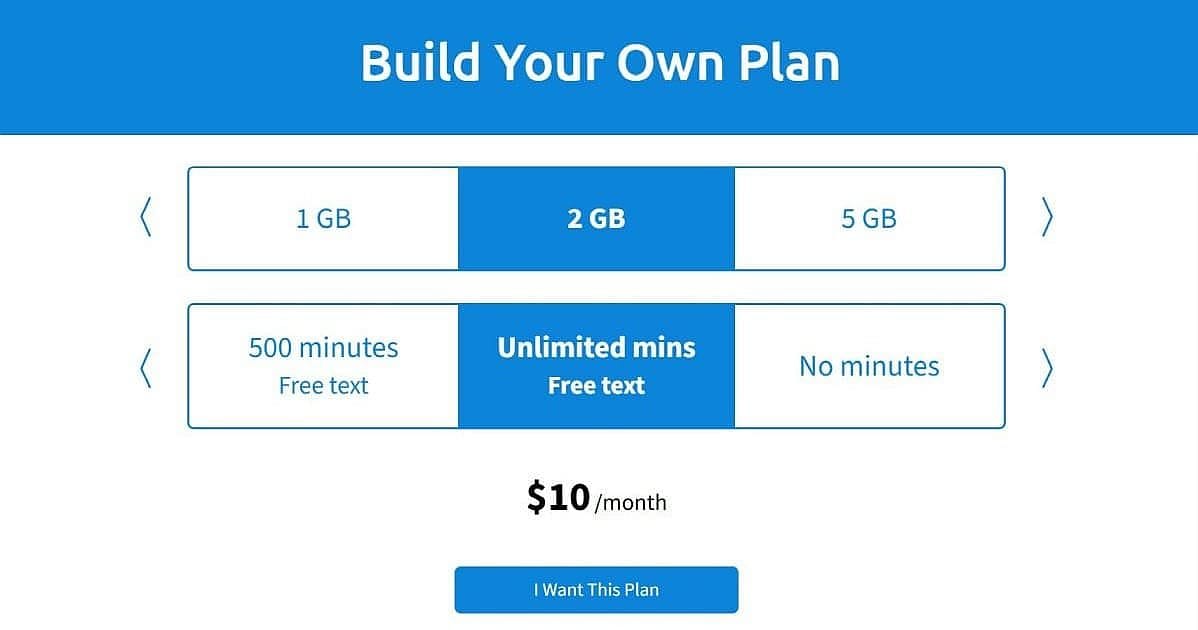
Tello Mobile $10 per month 2GB unlimited minutes plan screenshot showing Build Your Own Plan options.

Tello Mobile caught my attention when Perplexity AI suggested it as a way to slash my monthly phone bill — and it delivered. I was on a big‑name network, paying around forty‑five dollars a month with taxes and fees included, and barely scratching 200MB of data thanks to fiber WiFi and WiFi calling at home. Something had to give.

Read more

Budget PC Build: How Cascading Components Make Each New PC Cheaper

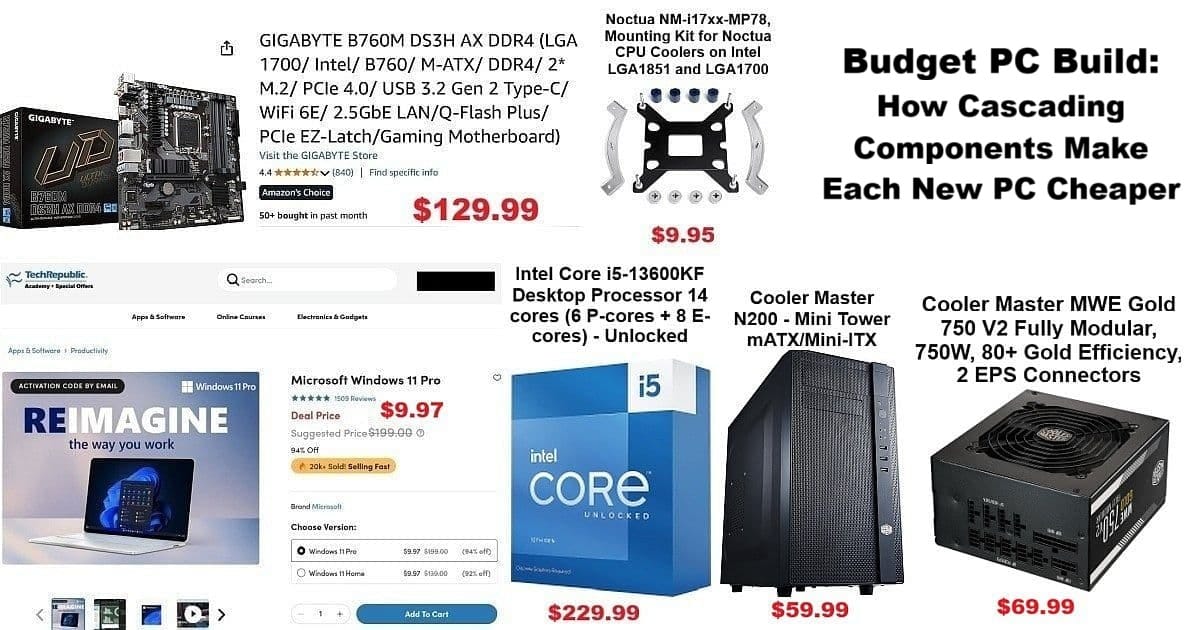
Budget PC Build infographic showing key cascading components: Intel i5-13600KF CPU, Gigabyte B760M DS3H AX motherboard, Cooler Master N200 case, Cooler Master MWE Gold 750W modular power supply, Noctua mounting kit, and Windows 11 Pro $9.97 TechRepublic deal. Prominent prices and headline: “Budget PC Build: How Cascading Components Make Each New PC Cheaper.”

Building a budget PC build isn’t just about saving dollars upfront—it’s about leveraging previous hardware investments to make every new rig more affordable and strategic over time. This journey began thanks to the jaw-dropping $9.97 Windows 11 Pro deal from TechRepublic Academy, which became the catalyst for this round of upgrades.

Whether your first build costs $550 or $1050, BYOPC (Build Your Own PC) strategies help you cascade older components forward, lowering the cost for every subsequent system. Here, you’ll discover how cascading, gifting, and repurposing parts create a long-term ecosystem where each new build gets cheaper—a method that keeps your setups current but your wallet happy.

Read more

Cooler Master N200: The Micro-ATX Case That Still Gets It Right

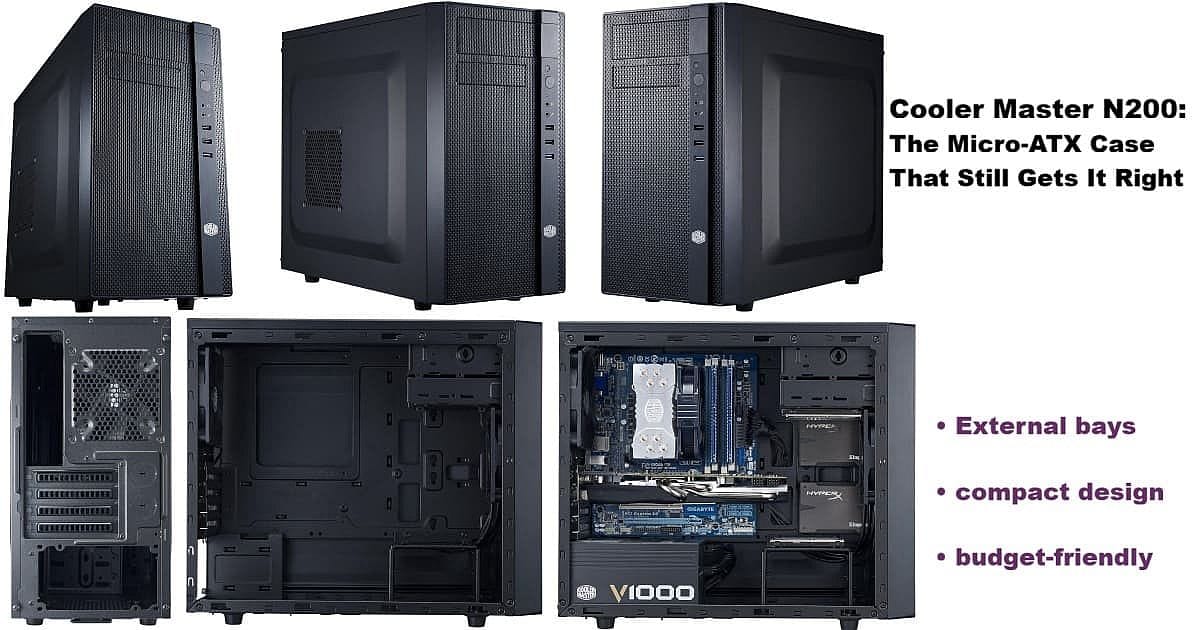
Cooler Master N200 micro-ATX PC case collage showing front, side, rear, empty interior, and fully built system. Highlights external bays, compact design, and budget-friendly features.

Building the i5-13600KF rig reminded me why the Cooler Master N200 is the micro-ATX case that truly solves modern problems for practical PC builders. After years searching for something like the old Rosewill FBM-01—a dependable, budget-friendly case with external drive bays—I stumbled upon the N200 purely by accident.

It’s not nostalgia driving this post. The real strength of external bays is versatility—they offer options that are rare in today’s case market. The Cooler Master N200 stands out in 2024/2025 for keeping one 5.25″ and one 3.5″ bay up front. Hot-swap drives, extra USB-C ports, card readers, fan controllers—whatever your build needs, these bays make it possible even in a compact Micro-ATX case.

This isn’t about chasing trends; it’s about keeping useful features alive for builders who need them.

Read more

Two AIs, One Blogger: Why I Pay $40/Month for Claude and Perplexity

The AI Whisperer in fedora silhouette flanked by two robots labeled Perplexity and Claude AI, with title text 'Two AIs, One Blogger: Why I Pay $40/Month for Claude and Perplexity'

Living below the US poverty guidelines means every dollar counts, but here I am paying $40 each month to keep both Claude and Perplexity in my workflow. Why would someone in my financial situation invest in two AI subscriptions? Let me bring in my Sidekicks to explain what Claude and Perplexity actually deliver for that money.

Sidekick Claude: I know I’m part of that $40, and I’m not pretending I’m the perfect tool for everything. I excel at troubleshooting, code help, and quick consults—like when you needed step-by-step guidance swapping switches on that K713 keyboard. But longform writing? That’s where I fumble. Remember the alt text struggle? I kept offering more options and asking clarifying questions until you hit my usage cap twice. Not my finest moment.

Sidekick Perplexity: That’s where I come in. Longform is my strength—no usage caps, no resets, no interruptions. When you tackled that WordPress theme migration for your four-part blog series, I handled the longform documentation and maintained flow from start to finish. Your recent posts? I draft them straight through while Claude handles the prep work and troubleshooting, never losing the thread.

This post itself is a live collaboration. Both Sidekicks are weighing in on how we split tasks, what works, and what breaks. Claude and Perplexity aren’t just tools I use—they’re the backbone of my blogging workflow, and you’re about to see exactly why that’s worth $40/month.

Read more

Translate »