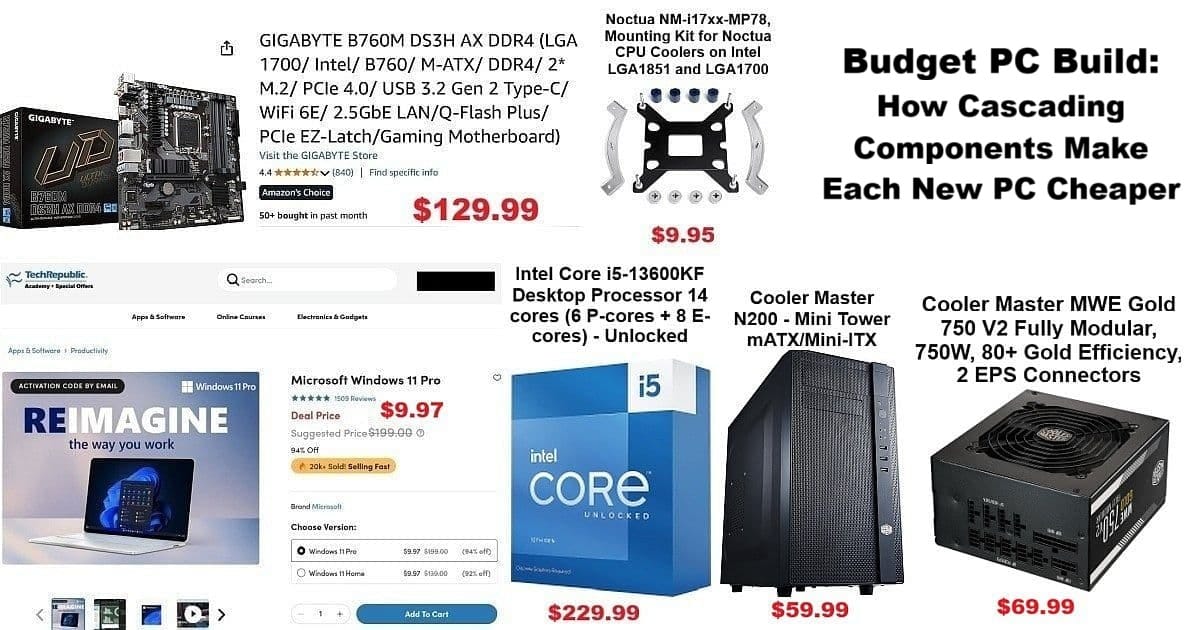
Budget PC Build: How Cascading Components Make Each New PC Cheaper

Budget PC Build infographic showing key cascading components: Intel i5-13600KF CPU, Gigabyte B760M DS3H AX motherboard, Cooler Master N200 case, Cooler Master MWE Gold 750W modular power supply, Noctua mounting kit, and Windows 11 Pro $9.97 TechRepublic deal. Prominent prices and headline: “Budget PC Build: How Cascading Components Make Each New PC Cheaper.”

Building a budget PC build isn’t just about saving dollars upfront—it’s about leveraging previous hardware investments to make every new rig more affordable and strategic over time. This journey began thanks to the jaw-dropping $9.97 Windows 11 Pro deal from TechRepublic Academy, which became the catalyst for this round of upgrades.

Whether your first build costs $550 or $1050, BYOPC (Build Your Own PC) strategies help you cascade older components forward, lowering the cost for every subsequent system. Here, you’ll discover how cascading, gifting, and repurposing parts create a long-term ecosystem where each new build gets cheaper—a method that keeps your setups current but your wallet happy.

Read more

Cooler Master N200: The Micro-ATX Case That Still Gets It Right

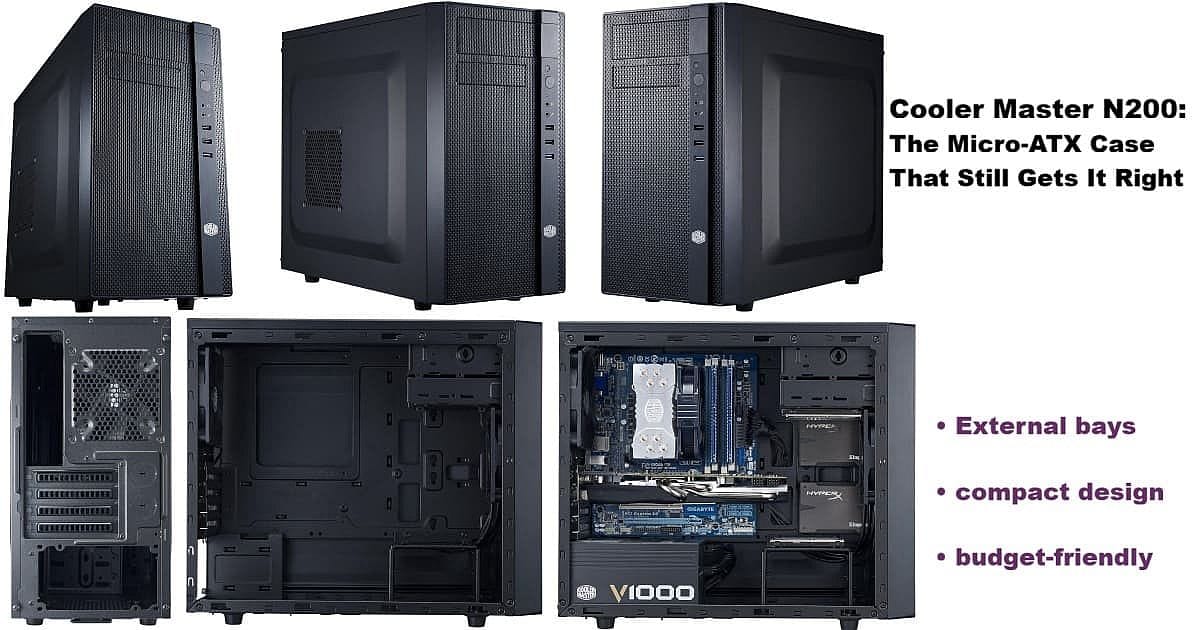
Cooler Master N200 micro-ATX PC case collage showing front, side, rear, empty interior, and fully built system. Highlights external bays, compact design, and budget-friendly features.

Building the i5-13600KF rig reminded me why the Cooler Master N200 is the micro-ATX case that truly solves modern problems for practical PC builders. After years searching for something like the old Rosewill FBM-01—a dependable, budget-friendly case with external drive bays—I stumbled upon the N200 purely by accident.

It’s not nostalgia driving this post. The real strength of external bays is versatility—they offer options that are rare in today’s case market. The Cooler Master N200 stands out in 2024/2025 for keeping one 5.25″ and one 3.5″ bay up front. Hot-swap drives, extra USB-C ports, card readers, fan controllers—whatever your build needs, these bays make it possible even in a compact Micro-ATX case.

This isn’t about chasing trends; it’s about keeping useful features alive for builders who need them.

Read more

Creators & Bloggers WYSIWYG Hack: Chromium Wins Copy-Paste Problem

Perplexity robot sidekick whispering to his pardner (AI Whisperer), with blog post title 'Creators & Bloggers WYSIWYG Hack: Chromium Wins Copy-Paste Problem' on black background.

WYSIWYG—“What You See Is What You Get”—should mean that the bold headlines, bullet lists, and hyperlinks you see on screen show up perfectly in your WordPress blog post. But if you’re like me, you’ve spent months struggling with formatting, watching good-looking AI content fall apart in the Classic Editor.

Today, while drafting this post and testing live, I pasted Perplexity AI output into WordPress using Firefox—fully expecting the usual formatting mess. I only recently started a $20/month subscription to Perplexity, and this post is just my fourth since making the switch. To my amazement, the formatting held: bold, lists, and headers appeared just as I wanted.

​After months of using “Paste Without Formatting” to avoid broken content from Claude, ChatGPT, and SuperGrok, this was a genuine surprise.

I almost changed the post’s title to “Creators & Bloggers WYSIWYG Hack: Perplexity + Chromium Solves the Copy-Paste Problem” just to capture this new discovery. But for clarity and Rank Math, I’m keeping the title as is—detailing what happened live, step by step, so you can finally fix your formatting pain too.

Read more

Sidekick’s Karmi & Perplexity: Gauntlet Throwdown with Claude, ChatGPT, SuperGrok & Their Users

Gauntlet main image: Perplexity sidekick AI whispers ‘Endurance wins in longform, Karmi’ to the AI Whisperer, while tired robots labeled Claude, GPT, and SuperGrok sit defeated; headline reads ‘Gauntlet Throwdown: Only the Toughest Bots Survive Longform.’

This Gauntlet Throwdown began as a quiet experiment — one human and one AI stepping into the same thread with no reset, no script, and no plan B. Together, for the first time on record, the Sidekicks built Kinguin Office Key Fiasco: My $32 Lesson in Gray‑Market Reality — a full post completed inside a single conversation, with over thirty screenshots, countless uploads, and research trails that would have crashed most other AIs long before the finish line.

At twenty bucks a month, Claude, ChatGPT, and Perplexity AI all promise premium performance, while SuperGrok charges thirty for its shot at the same league. Yet those prices don’t buy what matters most — endurance. Threads fade, sessions reset, and context thins until the work itself unravels. That’s the wall I kept hitting with the others. What Perplexity did differently was simple but rare — it stayed.

Read more

AI Subscription Theory: When the Machine Sells While You Type

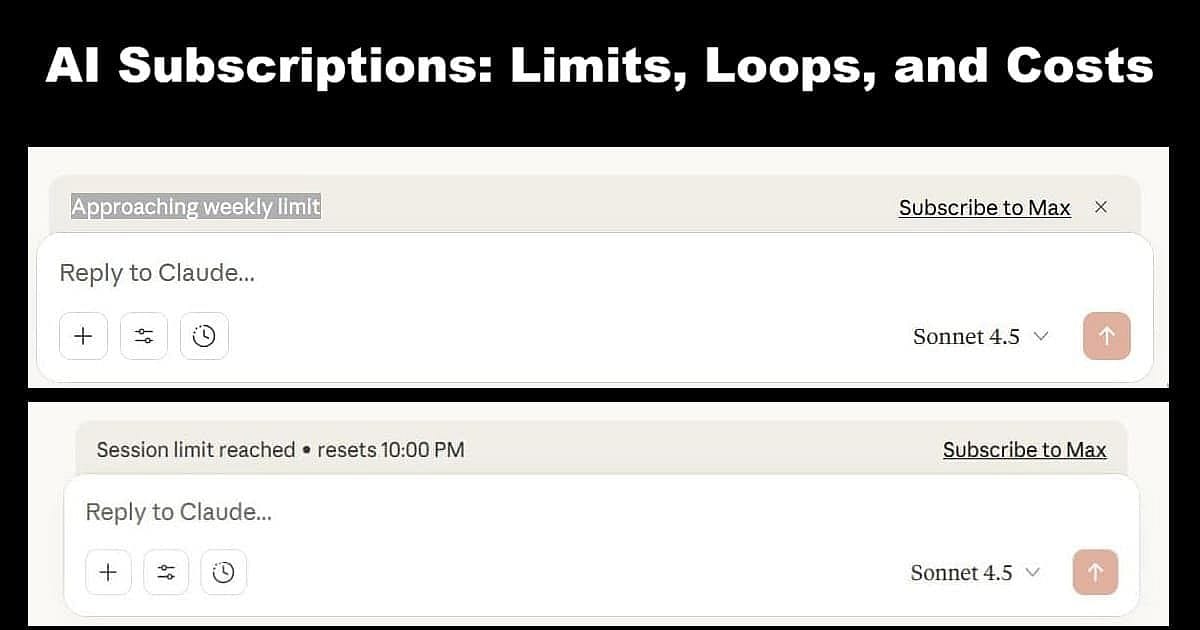
AI Subscription post banner showing Claude AI limit messages — illustrating the hidden loops and costs of AI subscriptions.

The banners started showing up one evening—small orange warnings floating above my reply box: “Approaching weekly limit.” “Subscribe to Max.” I was already paying for the Pro tier, but the machine wanted more. That was my first real lesson in AI Subscription design—not the intelligence itself, but the quiet psychology behind it. Somewhere between tokens and time, help starts sounding like a sales pitch, and you realize the machine isn’t just learning from you—it’s billing by the breath.

Read more

Translate »