
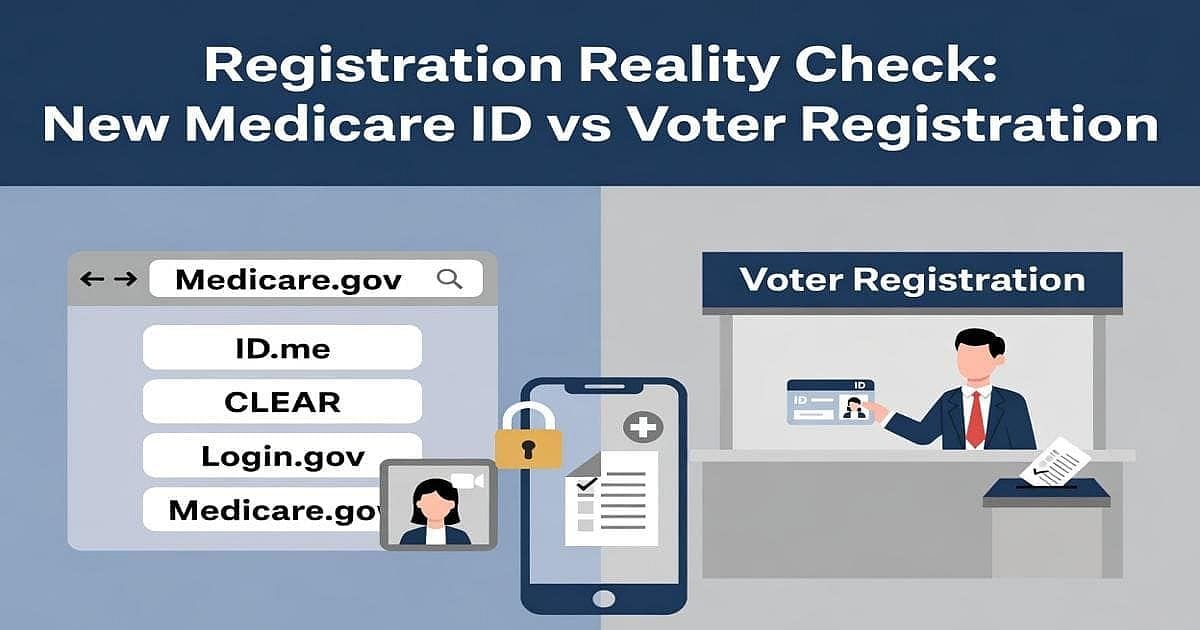
My recent battle with Medicare’s new online registration system made me think a lot harder about how we handle voter registration in this country. What Washington now demands for basic benefits makes the debate over simple voter ID look more than a little upside‑down.
Most Americans still register to vote the old‑fashioned way: a short form, a basic ID, maybe a quick stop at a county or state office, and you’re done. There’s no motion‑photo selfie, no video call with a stranger, no juggling half your life’s documents under a phone camera just to prove you exist. That’s not how my “enhanced” Medicare registration went—and that contrast is exactly where this story is headed.
That one word—registration—now seems to control everything from my Medicare benefits to whether my vote counts. And after surviving Medicare’s new identity maze, I’ve reached a simple conclusion: if citizens can jump through serious hoops to keep Social Security and Medicare running, we can certainly handle showing basic ID for voter registration and voting itself.
Surviving the new Medicare registration gauntlet
When I first set up online access to Social Security years ago, I used Login.gov and it felt fairly simple, even if I couldn’t describe every screen today. I answered some questions, created a basic login, and the federal site quietly let me in to manage my benefits—no selfies, no video, no document pile on the kitchen table.
By the time Medicare’s new log‑in email landed in my inbox, I was already sitting on three separate registrations: an older Medicare.gov account, an ID.me account from some past federal need, and that forgotten Login.gov account. When I clicked over to Medicare.gov, my old username and password no longer worked, and the new screen greeted me with four big buttons—ID.me at the top, then CLEAR, Login.gov, and Medicare.gov at the bottom.
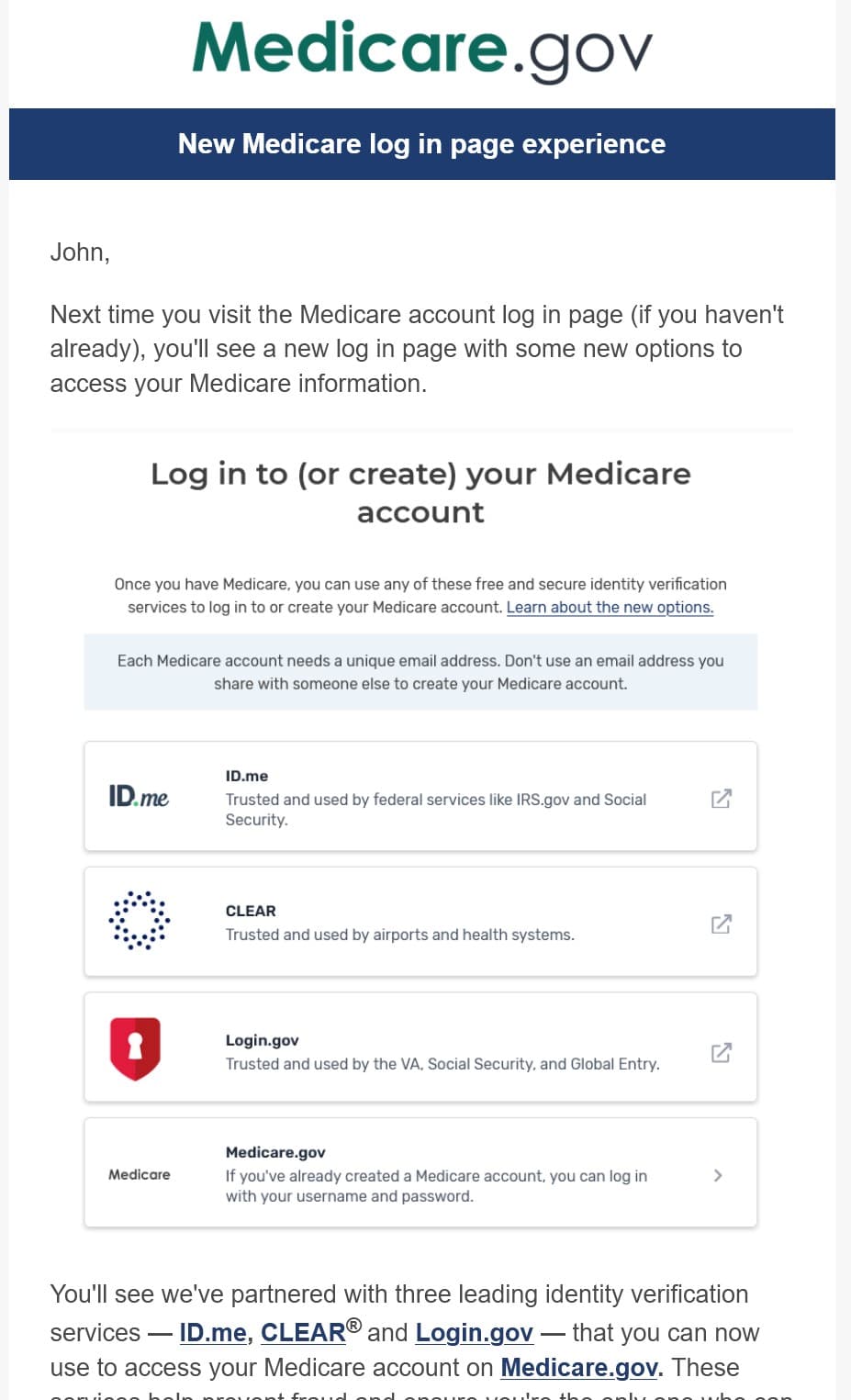
Staring at that layout, I did what a lot of people would do: I hit the top ID.me button without really knowing what I was signing up for, or how different it might be from Login.gov or the “plain” Medicare.gov route. That single click is what dropped me into the full modern verification gauntlet that the rest of this story describes.
Once I was inside the ID.me path, the familiar username‑and‑password world disappeared and the registration turned into a full identity check. First came the driver’s license upload on my phone, followed by the surprise demand for a “motion photo” or video‑style selfie that my perfectly good Galaxy A14 didn’t seem eager to provide.
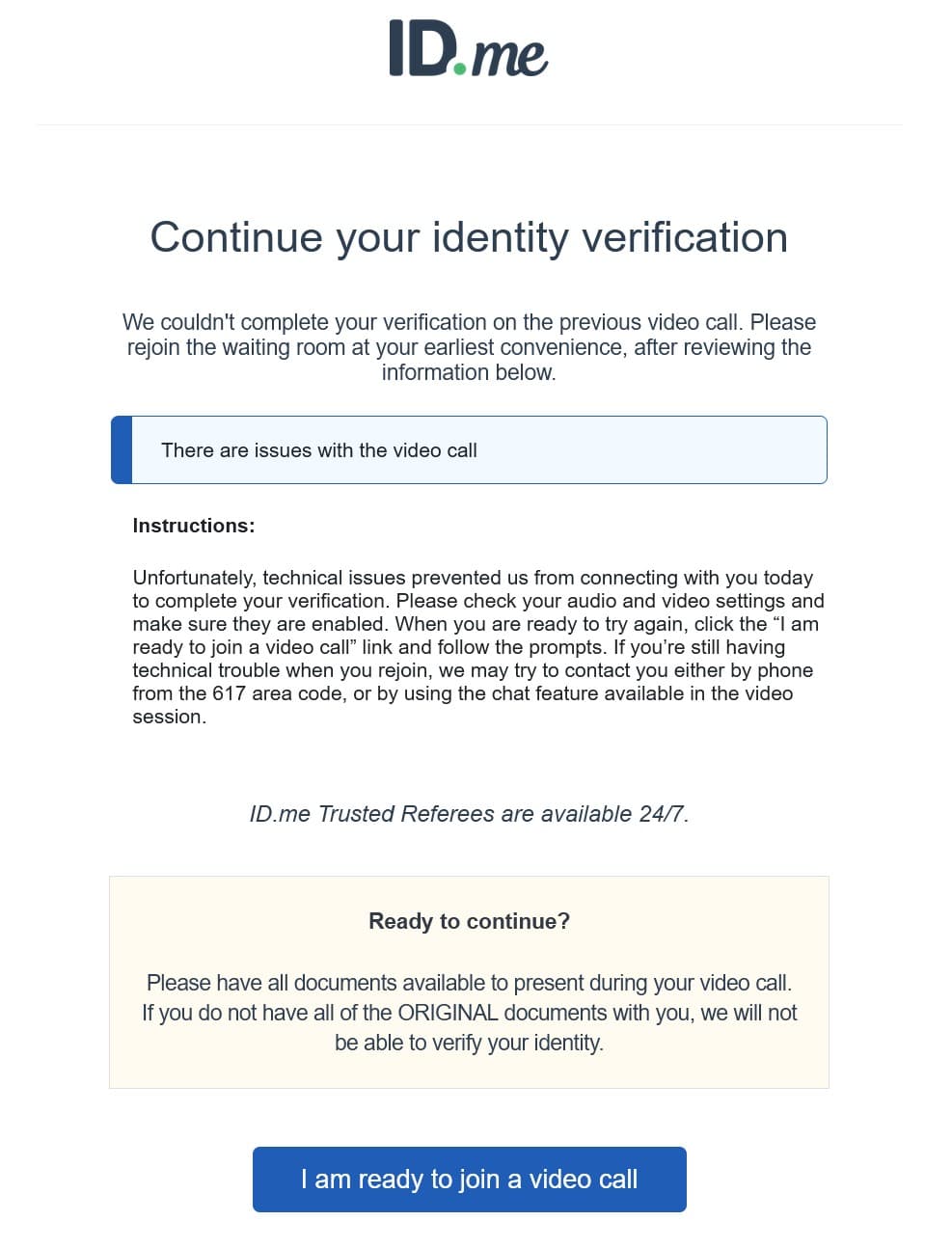
When that automated selfie step failed, ID.me escalated me to a live video call with a “trusted referee.” On paper that sounds simple, but my main PC doesn’t even have a camera or microphone, and I had never done a real video call on the phone, so I sat there not knowing what to click or which device they expected me to use. The first call attempt fizzled out, and ID.me sent me a follow‑up email inviting me to “rejoin the waiting room” for a second try—complete with a warning to have all the original documents ready to hold up to the camera.
On the second video call, I finally managed to get phone, audio, and camera all pointed in the right direction. I held up my driver’s license, my beat‑up Social Security card, and my Medicare card one by one while the remote agent compared them to the earlier uploads and the information on screen. Only after that human referee clicked approve did the system agree that I had survived the registration gauntlet and let me back into my own Medicare world.
Voter registration in the real world
Now put that experience next to voter registration. In most places, including my own Florida, getting onto the voter rolls is still fairly simple. You can register when you get a driver’s license, use an official state website, or drop by your county elections office. You fill out a form, present basic ID if needed, and you’re on your way. If anything goes wrong, there’s usually a local human being at a desk who can straighten it out without demanding a video selfie or a stack of backup documents.
The biggest difference is that voter registration is still mostly local and mostly human. You talk to county staff, not a remote contractor in another state. You hand over an ID card across a counter instead of trying to get a blurry phone camera to decide whether your driver’s license is “readable” enough. In many cases, your registration can also be updated when you move, renew your license, or interact with other state offices. It’s not perfect, but it’s familiar—and it doesn’t assume everyone has a smartphone and a strong signal.
That’s why arguments against voter ID ring hollow to me now. We already accept serious ID requirements for checks, bank accounts, Social Security access, IRS logins, and now this fortified Medicare registration system. We show ID to write or cash checks, to enter certain buildings, to fly, and to attend political events. Somehow, in all those areas, identification is treated as basic common sense. Only when we get to elections does a driver’s license suddenly become an unbearable burden.
When registration is easy and when it’s not
The truth is that registration is easy when the people in charge want it to be easy. Local voter registration is relatively straightforward because states and counties still think of voting as a fundamental civic act. They build in-person options, customer‑service desks, and paper paths that work even when you’re not a tech expert. They don’t demand high‑definition selfies or motion‑photo clips just to let you onto the rolls.
By contrast, Medicare’s new ID system is what happens when security and liability completely dominate the design. The priority is to block fraud at all costs, even if that means burying legitimate users under layers of digital verification. For the bureaucrats and vendors involved, false positives—locking out real people—are unfortunate, but tolerable. False negatives—letting in someone who shouldn’t be there—are the real nightmare. The result is a registration gauntlet built for auditors, not for actual human beings.
If politicians and activists really believed that voter ID would “disenfranchise” the people who can’t navigate complicated systems, they would be protesting this new Medicare registration just as loudly. But they aren’t. The same people who shrug at multiple IDs, video calls, and motion‑photo selfies for federal benefits will turn around and say that showing a photo ID at the polls is a step too far. That disconnect is exactly what needs a reality check.
The registration reality check we need
My Medicare story doesn’t prove that every voter ID law is perfect. States can certainly design bad rules, and they should be called out when they do. If a state makes it impossible for poor, elderly, or rural voters to get ID, that’s a policy failure, not a virtue. But pretending that any form of voter ID is inherently oppressive ignores how much identification the government already insists on in every other corner of life.
The registration reality check is simple: if the federal government can demand multiple documents, live video, and high‑tech verification just to let me see my own Medicare information, then requiring a basic, reasonably accessible ID to register and vote is not some shocking overreach. It’s a logical extension of how seriously we already treat far less important transactions. Voting is not less important than a benefits portal; it’s more important.
Citizens like me have proved that we can navigate heavy‑handed digital registration when there’s no other choice. We jump through the hoops, we fix the blurry photos, we endure the video calls, and eventually the system acknowledges that we are who we’ve always been. Compared to that, showing a state ID card at the polls—or presenting one at a local office when we first sign up to vote—is a minor ask.
If our society accepts intense verification for Medicare, Social Security, and everything else tied to a government check, then voter registration shouldn’t be the one sacred exception. The real question isn’t whether we use ID, but whether we make that ID easy and fair to obtain. And after my recent trip through the new Medicare registration maze, I’m more convinced than ever that America is fully capable of handling voter ID—once we stop pretending that ordinary citizens are too fragile for the same standards we already live with everywhere else.
What other registration headaches look like
My own gauntlet ran through ID.me, but the other registration doors aren’t exactly friction‑free either. Some people hit walls right on Medicare.gov itself—account‑creation forms that won’t submit, “can’t create account” or “something went wrong” messages, or older logins that stop working once the new enhanced page shows up.
Others report trouble when they pick Login.gov instead. The help pages are full of tips for when the selfie or ID‑photo tools won’t cooperate, when a phone is required but the camera app won’t behave, or when the system simply says it can’t verify someone and sends them back to try again. CLEAR brings its own questions, especially from people who mostly know it from airports and now find themselves handing even more biometric data to a private company just to get through a Medicare‑style registration screen.
ID.me still generates the most visible complaints, especially around video selfies and live calls, but the bigger pattern matters more than any one vendor. Across all four choices—Medicare.gov, Login.gov, CLEAR, and ID.me—the federal message is the same: the era of casual, low‑friction registration for benefits is ending, while voter registration and voter ID are somehow still treated as if asking for identification is a radical step.
Outro: the phone, registration, and voter ID
Even as I grumble about this new registration maze, I have to admit the world has changed—and so have we. Almost everyone in America now walks around with some kind of phone, even if it’s only a basic flip model, and that pocket device has quietly become the key to everything from banking and benefits to doctor visits and delivery drivers finding the right driveway.
The federal government is finally acting like that phone exists. Medicare, Social Security, and a growing list of agencies now expect us to text back codes, tap verification links, snap ID photos, or even hold a live video call to prove we are who we say we are. If a semi‑reclusive, eighty‑ish hermit like me can be dragged into the twenty‑first century by a Medicare registration page and a stubborn Galaxy, it’s hard to argue that ordinary citizens can’t handle basic identification in other parts of civic life.
That doesn’t mean every system is well designed; my ID gauntlet proves they can still make a mess of it. But the bigger point stands: we already accept phone‑based codes, multi‑step logins, and strict ID checks just to check benefits, refill prescriptions, or see our own records. If we can manage that level of registration for the money and services government sends out, we can certainly manage voter ID and solid voter registration rules for the power we send back in.
Links to similar posts: